CoVE STEM Europe Conference on Industrial Challenges and Future Workforce Development in Gjilan
Within the framework of the Erasmus+ project CoVE STEM Europe, a conference titled “Challenges of Industrial Enterprises in Kosovo and Technological Developments” was successfully held on October 23, 2025, at the Public University “Kadri Zeka” (UKZ) in Gjilan.
The event was organized by the Center of Vocational Excellence (CoVE) Gjilan at the Faculty of Applied Sciences within UKZ, led by Prof. Dr. Xhevdet Thaqi and his team.
The primary goal of the conference was to convene key stakeholders from higher education, industry, and partner organizations to identify the main challenges currently facing the industrial sector in Kosovo. Furthermore, participants discussed the significant opportunities provided by the CoVE STEM Europe project in strengthening the crucial link between education and the labor market.
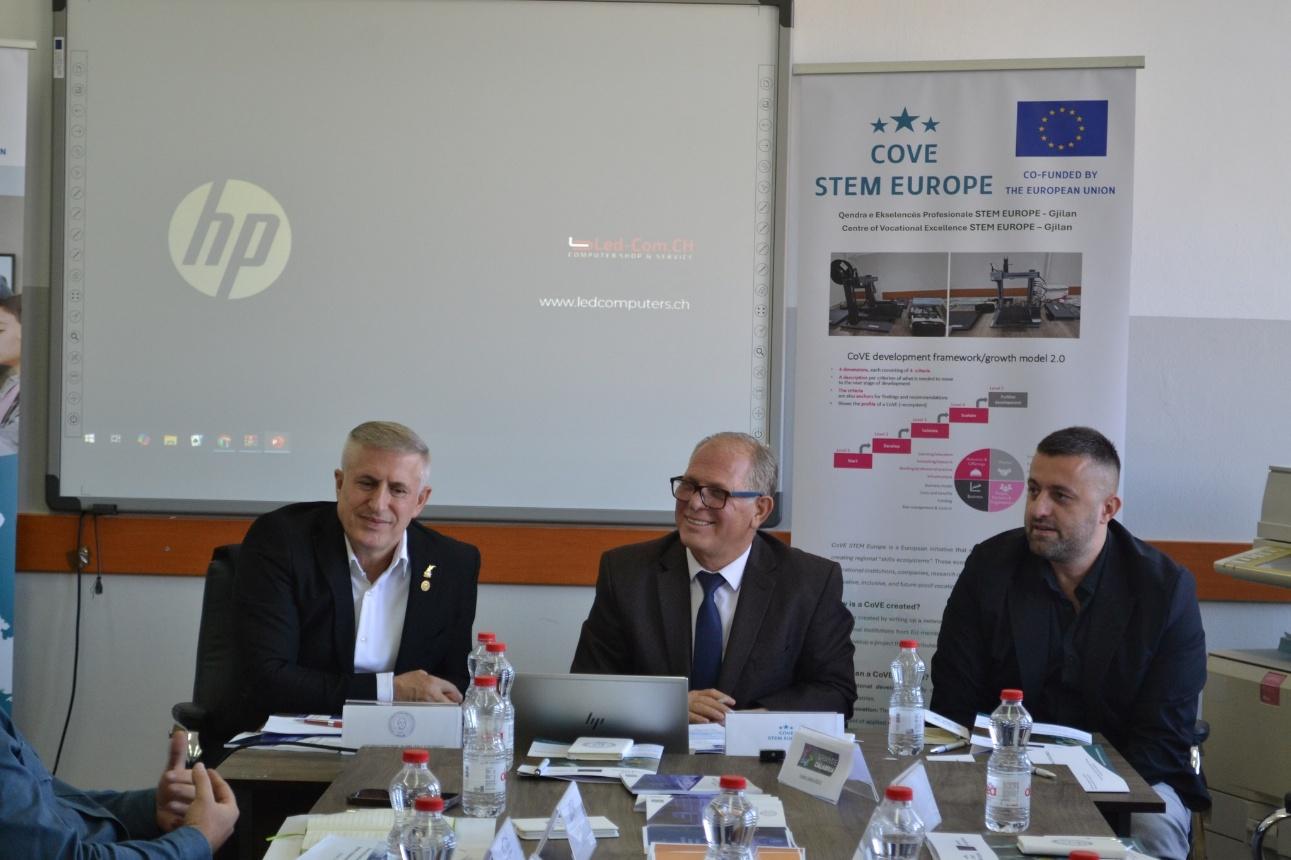
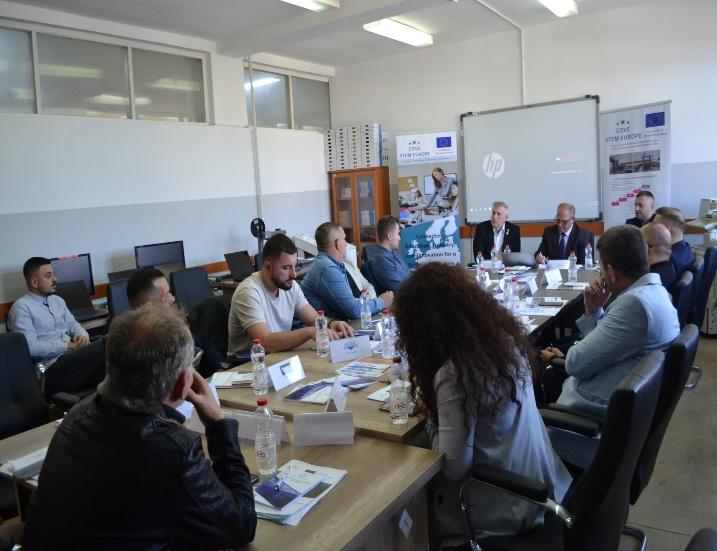
The conference brought together a diverse group of participants, including representatives from academic institutions, the private sector, students from various STEM programs, and partner organizations. Notably, the event was attended by representatives from over 15 regional industrial companies, UKZ academic staff, and students.
The panel featured key figures such as Prof. Dr. Xhevdet Thaqi, Dean of the Faculty of Applied Sciences and Coordinator of the CoVE STEM Europe Project; Ismajl Baftjari, Director of the Institute of Science and Technology – INSI; and Gëzim Selimi, Representative of Meat Industry Calabria - IMC “Natura”.
In his opening remarks, Prof. Dr. Xhevdet Thaqi emphasized the critical importance of partnerships between universities and industry. He stressed the need to prepare young professionals who are ready to meet the demands of the modern labor market, stating clearly that “University education must be the driving force of technological change and innovation”.
The discussions highlighted several shared challenges faced by industry representatives in the region. These critical issues included:
• The lack of qualified professionals in areas like engineering, electronics, and technology.
• Difficulties in recruitment and the subsequent need for extensive technical staff training.
• High maintenance costs for industrial equipment and an undesirable reliance on foreign experts.
• The absence of sustainable collaboration mechanisms with universities for developing practical curricula.
Specific company representatives underscored these concerns:
• Gëzim Selimi (IMC “Natura”) noted that the lack of professionally trained workers results in time loss and additional costs for internal training.
• Ismajl Baftjari (INSI) emphasized the need for sustainable cooperation and pointed out that his company lacks practical engineers and programmers proficient in modern technologies.
• Dardan Shala (DEA Company) highlighted the struggle to find engineers in electronics, machinery, and mechatronics, combined with the migration of trained professionals to foreign labor markets.
• Burhan Hoti (Road Construction ZUKA Company) spoke about the shortage of professionals in industrial technology maintenance, forcing companies to hire expensive foreign experts.
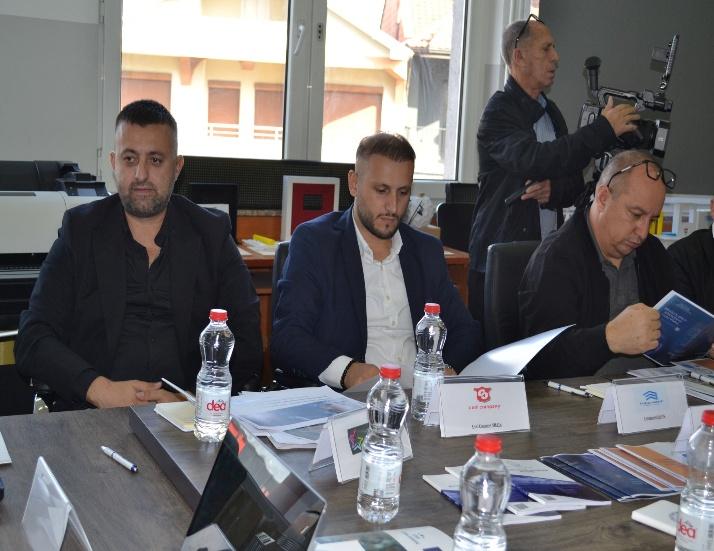
Despite the challenges, the commitment to improvement was strong. Bashkim Haziri (EHG – Eco Holding Group) welcomed the establishment of the Center of Vocational Excellence (CoVE) at UKZ as a valuable opportunity for mutual collaboration. Armend Demolli (BRICKOS) highlighted that engineers in electronics, mechanical, construction, and mechatronic fields are the backbone of industrial production.
Concrete Recommendations for the Future
Following the comprehensive dialogue, participants agreed upon several concrete recommendations aimed at closing the education-industry gap:
1. Integration of professional practice as a mandatory component of university curricula.
2. Strengthening of STEM programs to ensure professionals are ready to enter the labor market upon graduation.
3. Establishment of structured collaboration mechanisms between universities and enterprises for both curriculum development and professional training.
4. Modernization of educational infrastructure and the inclusion of industry in designing practice-oriented learning.
The conference also dedicated a session to motivating youth to pursue studies in STEM fields.
The strong commitment of UKZ and its partners within the CoVE STEM Europe project to contribute to Kosovo’s economic development through market-oriented professional education and innovation was clear throughout the event. Participants did note that outdated vocational school infrastructure, the shortage of qualified teachers, and declining student interest in technical profiles remain key challenges requiring close cooperation.
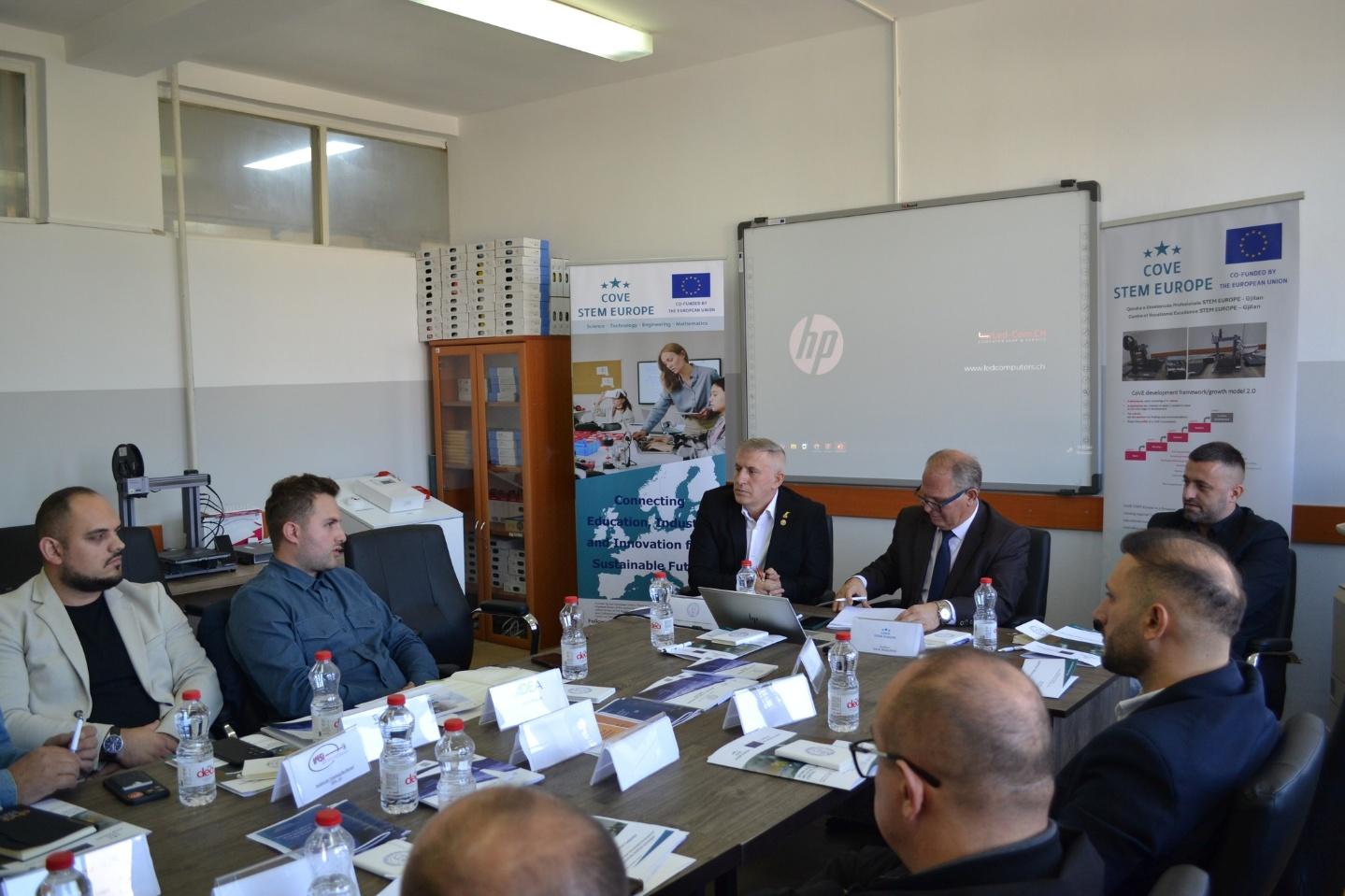
Crucially, the recommendations generated during this conference will be presented to the International Consortium of the CoVE STEM Europe Project. They will be further discussed during the Transnational Project Meeting (TPM), scheduled to be held right back at the Public University “Kadri Zeka” on November 18–20, 2025.
The event garnered attention from various media outlets, demonstrating the public significance of the CoVE STEM Europe project's efforts in the region.
 Formerly co-funded by the Erasmus+ Programme of the European Union
